Quick answer
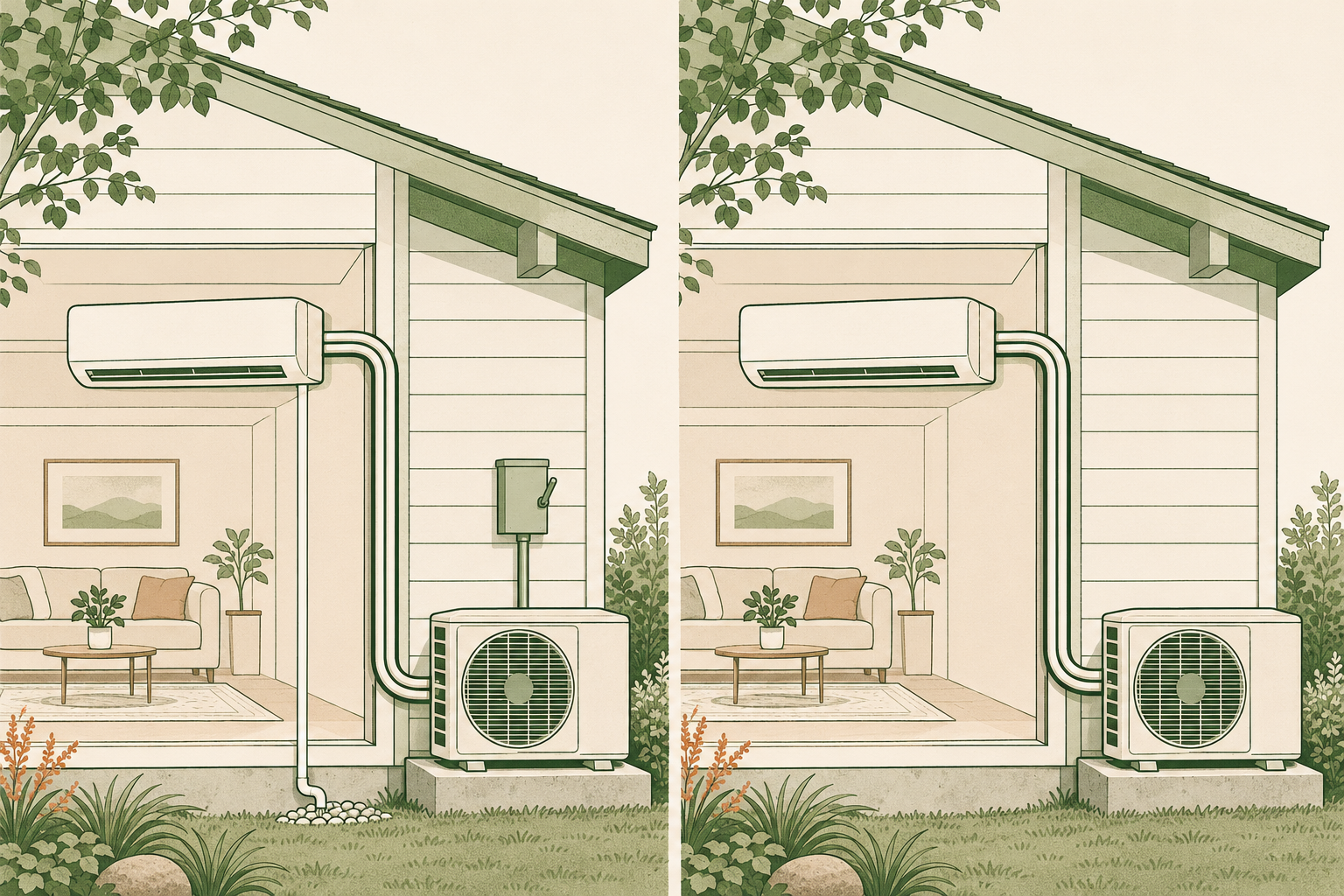
A lower mini-split quote rarely means a contractor is doing the same work for less money. Large price differences often come from excluded electrical work (requiring you to hire an electrician separately), shorter line-set allowances (with any extra-foot charge stated in the written proposal), entry-tier equipment with lower cold-weather heating output, omitted permits, or no labor warranty.
Before signing any contract, demand itemized model numbers, exact line lengths, electrical scope, and permit responsibilities in writing.
Anatomy of an installation bid
An honest mini-split installation bid consists of five distinct cost buckets: wholesale equipment, specialized mechanical labor (flare fittings, nitrogen purge, vacuum pull to <500 microns), electrical supply (208/230V circuit, disconnect box, whip), physical routing materials (copper lines, drain hose, wall brackets, protective line-hide channel), and legal compliance (permits and municipality inspections).
When a quote looks unusually cheap, one or more of these buckets has been excluded from the contractor’s scope and pushed onto the homeowner as a surprise extra.
A $1,700 price gap explained line by line
Consider two real-world proposals for the same 12,000 BTU single-zone installation in a suburban master bedroom:
| Scope item | Bid A ($3,400) “Budget bid” | Bid B ($5,100) “Turnkey bid” | How the gap is created |
|---|---|---|---|
| Equipment model | Builder-grade brand (18 SEER2, standard heat) | Tier-1 cold-climate model (28 SEER2, 100% heat at 5°F) | $600 – $900 difference in wholesale equipment cost. |
| Electrical circuit | Excluded (“By owner / electrician”) | Included (New 20A 240V circuit + disconnect box) | Bid A requires hiring an electrician separately ($600–$1,200). |
| Line-set allowance | 15 ft included; $40/ft extra | Up to 35 ft included with line-hide covers | A 25 ft run adds $400 in change orders to Bid A. |
| Mounting | Plastic ground pad on unlevel soil | Heavy-duty powder-coated wall bracket or concrete pad | Wall bracket elevates unit above snowdrifts and leaf debris. |
| Permit & inspection | Excluded | Included (Contractor pulls permit and attends inspection) | Permit fees and homeowner filing time ($150–$300). |
| Labor warranty | 90 days | 2 years complete labor warranty | Covers post-install refrigerant leaks or condensate clogs. |
Once the homeowner pays an electrician $850 to run the 240V wire and pays $400 for the extra 10 feet of copper line, Bid A actually costs $4,650—for a different equipment and warranty scope.
The four most common hidden exclusions
- Electrical circuit and disconnect: Mini-splits require a dedicated 208/230V or 115V circuit terminating in a weather-resistant disconnect box within sight of the outdoor unit. Unless the quote explicitly says “includes high-voltage electrical feed from main panel,” assume it is excluded.
- Line-set length and aesthetic covers: Basic quotes include only 15 feet of line set and wrap it in cheap vinyl tape. Extra length costs $25–$50 per foot, and durable, paintable PVC line-hide covers (e.g., Slimduct or Fortress) cost $200–$450 installed.
- Condensate drainage & pumps: Gravity drain lines are simple if the indoor head is on an outside wall. If mounted on an interior partition, draining water requires running pipe through an attic or installing an active mini-condensate pump ($150–$350). Low bids often omit the pump until installation day.
- Commissioning checks: Quality installers perform a pressure test with dry nitrogen (at 400–600 PSI for 24 hours), pull a deep vacuum below 500 microns with a digital micron gauge to remove moisture, and log operating pressures. Cheap installers skip pressure testing and release refrigerant into contaminated lines.
Equipment tiers: Premium inverter vs. budget brand
Wholesale equipment costs vary dramatically by manufacturer tier:
- Tier 1 (Mitsubishi Electric, Daikin, Fujitsu): Premium variable-capacity compressors, ultra-quiet indoor operation (as low as 19–21 dBA), high seasonal efficiency (24–33 SEER2), robust dealer parts distribution, and available 10–12 year warranties when installed by certified diamond/elite contractors.
- Tier 2 (Carrier, Trane, LG, Bosch, Gree, Midea): Solid residential performance (18–22 SEER2), reliable availability, and moderate parts support.
- Tier 3 / DIY brands (Senville, Pioneer, MrCool): Lower upfront cost, but lower seasonal efficiency (16–19 SEER2), shorter factory warranties, and many local licensed contractors refuse to service them.
Red flags vs. green flags on an HVAC quote
- Quote lists only a brand name with no specific indoor or outdoor model numbers.
- Total price with a one-line description like “Install 2-ton mini-split as discussed.”
- “Electrical by others” or “Permits not included in base bid.”
- Contractor did not measure rooms or inspect your electrical panel during the walkthrough.
How to force an apples-to-apples comparison
When you receive quotes with differing totals, copy and paste this request to both contractors:
“Thank you for the proposal. Before making a final decision, could you please provide a revised scope confirming: (1) exact indoor and outdoor model numbers, (2) whether electrical wiring, disconnect, and breakers from the main panel are included, (3) total included line-set footage and whether architectural line covers are included, (4) condensate drainage plan, (5) municipal permit responsibility, and (6) written parts and labor warranty durations?”
Enter their responses into our Quote Comparison Tool to review differences side-by-side, and check our National Cost Guide to see how the bids compare with published benchmarks.
A five-minute quote review
Before comparing totals, copy each proposal into the same checklist. The goal is not to choose the cheapest contractor from a national average; it is to identify missing scope while the installer can still answer questions.
- Match the equipment. Record indoor and outdoor model numbers, number of zones, capacity and efficiency ratings.
- Match the rooms. Confirm that each quote serves the same rooms and states whether doors are expected to remain open.
- Match the route. Compare line-set footage, wall penetrations, covers, mounting, condensate drainage and access work.
- Match completion. Check who handles electrical work, permits, inspection, evacuation, startup, testing and the owner handover.
- Match support. Record parts and labor warranty terms, registration requirements and after-installation call-out charges.
If a bidder cannot answer an item yet, mark it “unconfirmed” instead of assuming it is included. An unresolved line is more useful than a false sense of precision.