Quick answer
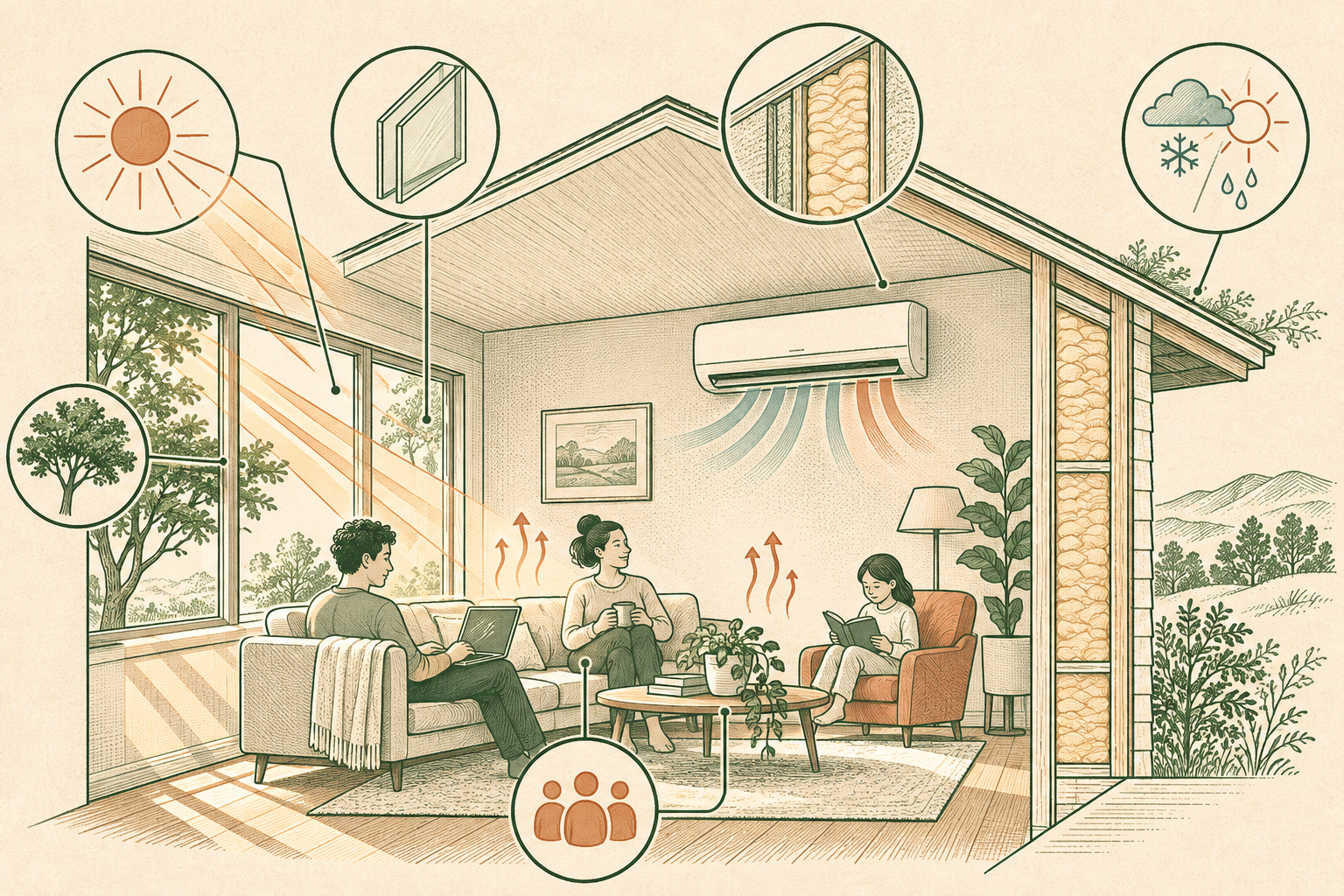
There is no universal monthly kWh figure for a mini-split. Consumption depends on the equipment's measured input, heating or cooling load, operating schedule, outdoor conditions and efficiency. Use measured kWh or an explicitly labeled scenario in the running-cost calculator.
Heat-pump heating usually draws more power than mild-weather cooling because the unit works harder against colder outdoor air. Multi-zone systems add indoor units, but total use still depends on the matched equipment and load.
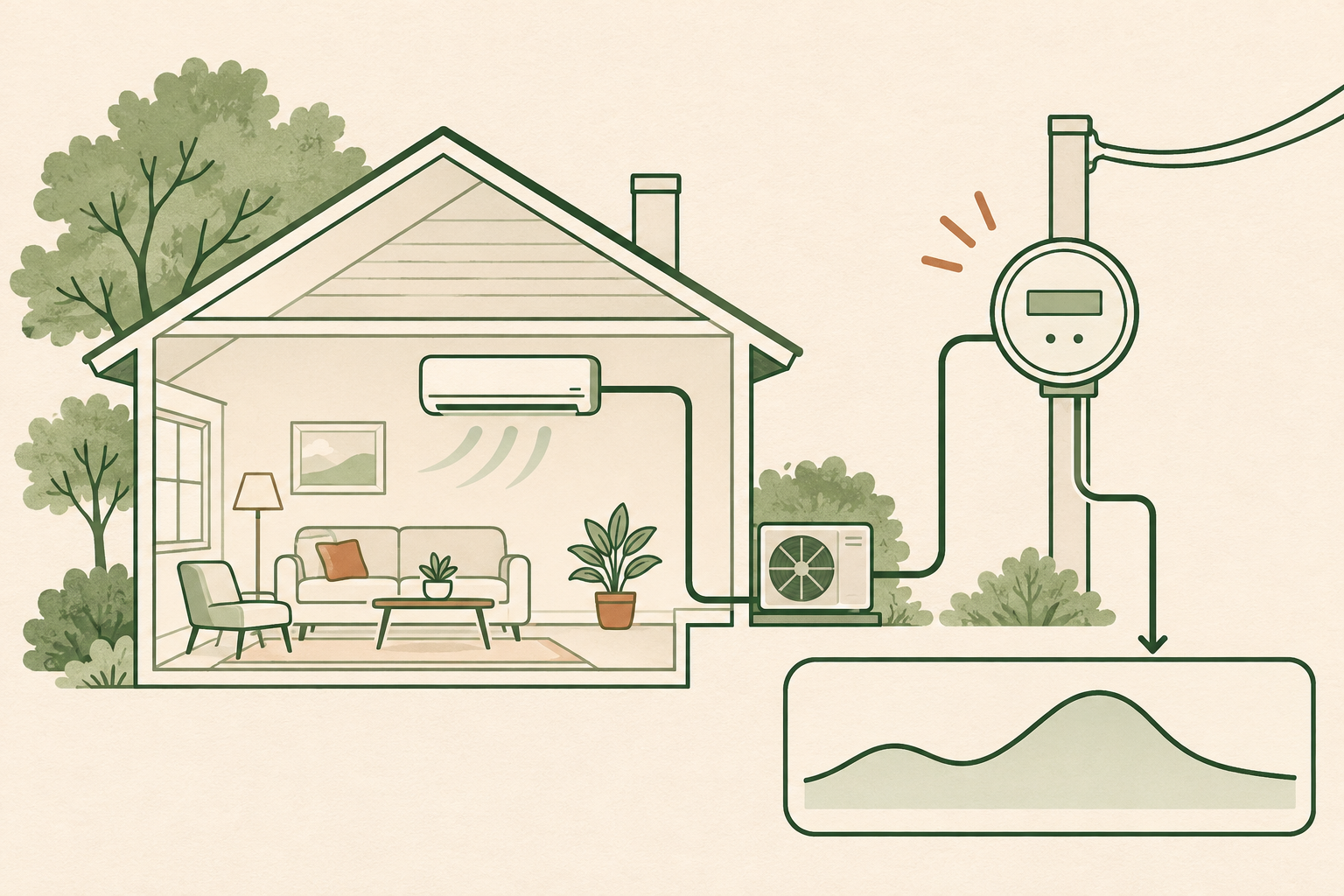
Four inputs. One transparent estimate.
Formula: Average input (kW) × Operating hours/day × Days in billing cycle × Electricity rate ($/kWh) = Monthly electricity cost.
How to estimate kWh for your equipment
Average input changes with load and conditions; nameplate maximum is not average consumption. Start from the matched system's measured data or a manufacturer performance value for the exact model, then apply your own operating hours and rate.
Use model-specific data. Example wattage is not included here because typical values vary too much by model, climate, controls and building load. Enter a measured average or a dated manufacturer value in the running-cost calculator.
How inverters change power draw
Many mini-splits use variable-speed compressors that adjust output as conditions change, so they usually run at partial output rather than cycling on and off at full power. Some central and window systems also use inverter technology. Actual input and operating time vary by model, weather, controls and building load.
Cold-climate models and backup heat
Standard heat pumps lose heating capacity as outdoor temperatures fall, and some rely on electric resistance backup when they cannot keep up. Cold-climate models are designed to hold more of their rated capacity in low temperatures. Compare the spec sheets for the models you are considering rather than assuming one brand's rating applies to all.
- Mitsubishi: Its April 2026 release for the 5-ton SMART MULTI H2i system states 100% of rated heating capacity at 5°F and 80% at -13°F. These figures apply to that product only, not to every H2i model.
- Daikin: Its Aurora R-32 literature says the system delivers up to 100% of rated heating capacity at 5°F. "Up to" marks a maximum, so check the specific model's data sheet.
- Fujitsu: Its XLTH catalog lists model-specific capacity percentages at low temperatures. Use the percentage for the exact model being quoted.
- Backup heat: Ask whether the proposed system uses resistance backup and at what outdoor temperature. Resistance heat turns each kWh of electricity into roughly one kWh of heat, so an extended cold snap can raise a bill well above a mild-weather estimate.
- Cold months differ: Compressors work harder as temperatures drop, so a cold month's bill does not scale directly from a mild month. Use your meter's readings for the cold period when you have them.
Using your local electricity rate
Electricity prices vary widely by utility, tariff and season. Use your bill's marginal rate (generation and delivery charges per kWh, excluding fixed monthly customer fees) and the operating hours you expect. Example arithmetic only: 180 kWh at $0.20/kWh is $36.00, while the same 180 kWh at $0.30/kWh is $54.00.
How to compare SEER2 savings
SEER2 is a seasonal cooling-efficiency rating, not a measured bill. To test a contractor's upgrade claim, compare the rated annual cooling energy of the matched systems and multiply by your rate and your actual cooling hours. Include the equipment price difference, installation scope and expected service life before deciding.
Three common electricity calculation mistakes
- Multiplying the breaker size by voltage: A mini-split on a 20-amp, 240-volt circuit does not draw 4,800 watts (20A × 240V). The breaker size indicates maximum momentary circuit safety capacity, not operational power draw.
- Comparing entire electric bills before and after: Homeowners often attribute an entire summer bill increase to their new mini-split, forgetting that hot weather also increases refrigerator run-times, pool pumps, and dehumidifiers.
- Turning the unit off for long periods and expecting a saving: Neither continuous operation nor daily shutdown is universally cheapest. Compare measured use under similar conditions and follow the exact equipment manual. See whether to leave a mini-split on all day for the trade-offs.
Interactive calculation tools
Test your exact operating hours, capacity, and local electric rate in our Running-Cost Calculator, and estimate full equipment and installation budgets with our Mini-Split Installation Cost Guide.
How to check your estimate against a real bill
Use a repeatable comparison instead of comparing two whole-house bills by month name. Record the meter-reading dates, the variable electricity rate, the mini-split's measured kWh if available, the operating mode, and the approximate outdoor conditions. Keep other large loads—such as a pool pump, space heater, or electric vehicle—separate in your notes.
- Start with the same duration. A 30-day estimate should be compared with a similar billing period, not a calendar month with different meter dates.
- Separate energy from fixed charges. Use the marginal price per kWh for the usage calculation. Existing customer charges are not mini-split operating costs.
- Label the measurement. A system-only meter is different from a whole-home bill. If you only have whole-home data, say so.
- Explain weather and schedule. Heating demand, cooling load, setpoints, occupancy and open doors can change consumption even when the equipment is unchanged.
Once you have a representative reading, enter it in the running-cost calculator using metered electricity. If the result differs from the bill, check the billing dates and other household loads before changing equipment settings.
Questions worth asking after installation
- Which indoor and outdoor model numbers should I use when looking up performance data?
- Where can I find the rated input, heating capacity and low-temperature performance for this exact combination?
- Does the system have electric backup heat, and how will I know when it is operating?
- Which kWh measurement would be meaningful for this system: a circuit monitor, submeter or utility data?
These questions turn a generic “how much electricity does it use?” search into a model-specific record you can improve over time. Manufacturer ratings describe controlled test conditions; your meter records your home.