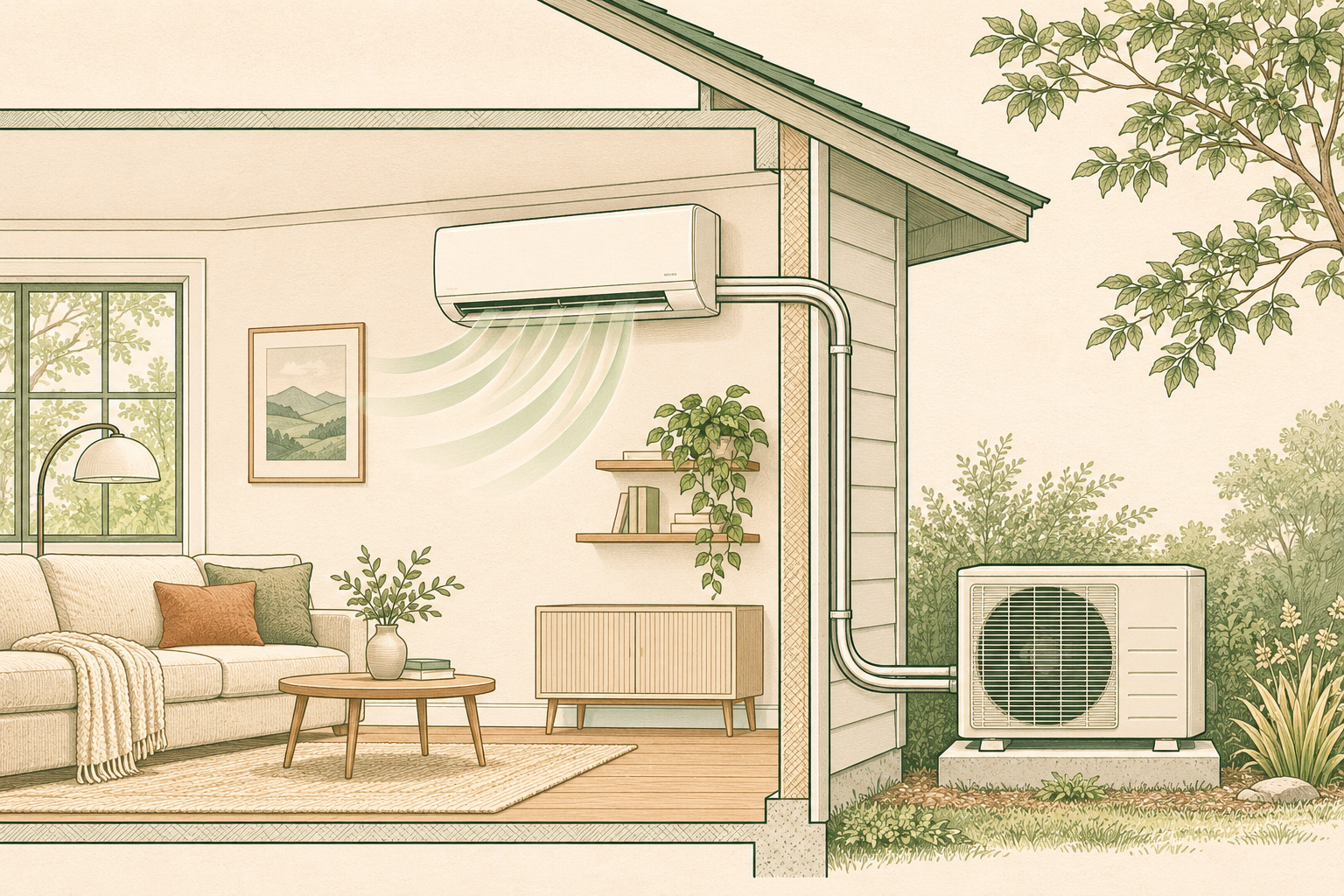
What the two units do
A ductless mini-split has an indoor unit that circulates room air and an outdoor unit connected by refrigerant lines. In cooling mode, the system moves heat from inside to outside. Condensed moisture from the indoor coil leaves through a drain. A heat-pump model can reverse the heat transfer to warm the room. Check the exact model if you want heating as well as cooling.
What “one zone” means in practice
Picture an open living and dining area beside a bedroom whose door stays closed overnight. A wall unit can circulate air through the open area. The thermostat reaching its setpoint there tells you little about the bedroom. Mark the bedroom on the floor plan and ask the installer to explain how it will receive heating and cooling under normal nighttime conditions.
Three questions to ask about a listing
- Which indoor and outdoor model numbers form the proposed system?
- What cooling and heating capacities does that combination deliver at the temperatures used to design my project?
- Does this price include the electrical work, refrigerant lines, drainage and startup?
Record the answers on the quote worksheet. For a heating project, request the manufacturer's performance data at your local winter design temperature.
Where to go next
Use the guide to mini-split disadvantages to check fit before choosing equipment. For system components and sizing guidance, see PNNL Building America: ductless heat pumps.