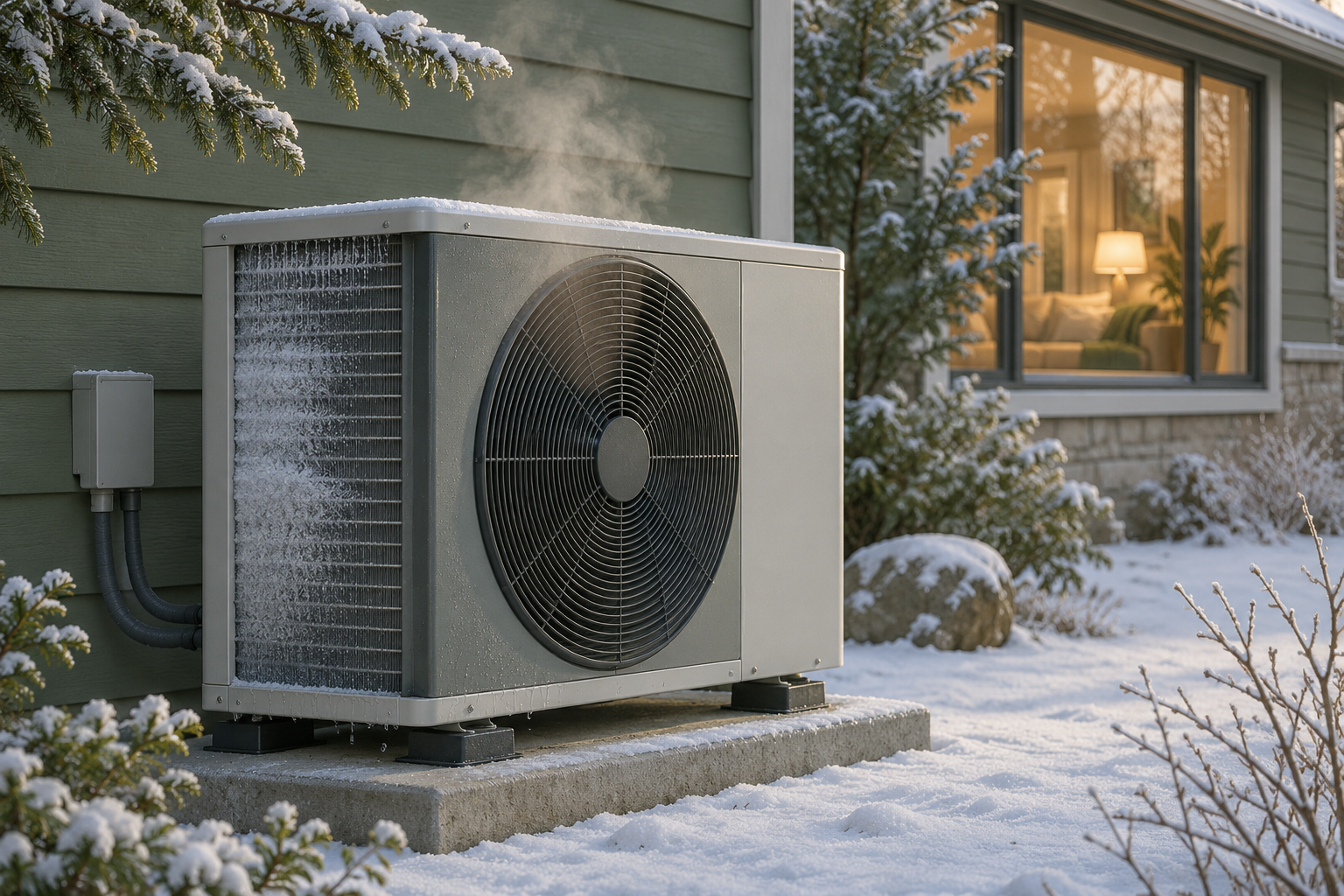
Start by separating two symptoms
A short pause in indoor heat followed by normal operation can occur during defrost. A home that stays below a comfortable temperature or continues losing heat needs a broader evaluation. Reddit reports from cold U.S. regions include homeowners asking whether the unit, home insulation, or supplemental heat is part of the problem. A post is an individual account, so it cannot diagnose your system.
Record a cold-weather pattern
For a few normal operating periods, note the date, outdoor conditions, indoor temperature measured away from the supply air, selected mode and setpoint, affected rooms, and whether warm air returns after a pause. Photograph displayed error codes and note whether other heat sources were in use. Do not remove panels, touch wiring or refrigerant lines, or chip ice from the equipment. If you suspect an electrical hazard, keep clear and call a qualified professional.
Compare your observations with the exact model’s owner manual. If you see a brief pause and then heating resumes, our defrost guide explains what to log. A persistent comfort problem is a different service question.
Ask about the installed equipment’s heating capacity
A mini-split’s headline BTU rating does not tell you the heating output of the exact system at your local winter conditions. Ask the installer to identify every indoor and outdoor model, show the matched system’s manufacturer performance data at the local heating design temperature, and compare that output with a room-by-room heating load calculation. In a multi-zone system, ask how the approved combination performs when the rooms call for heat together.
Also ask the technician to check the basics using approved service procedures: airflow, filters and indicators, operating mode, error history, and whether the system was installed and commissioned to the manufacturer’s instructions. Refrigerant diagnosis and electrical work belong to trained HVAC professionals.
Include the home’s heat loss in the conversation
Equipment capacity is only one part of the picture. Air leakage, attic and wall insulation, windows, basement conditions, and room-to-room airflow can all affect comfort. In a New York Reddit thread, the homeowner later noted that the attic was poorly insulated; that observation is a prompt to evaluate the building envelope, not proof that insulation alone explains every cold-weather complaint.
Ask a qualified energy auditor or contractor whether an energy assessment would help identify air leakage and insulation opportunities. Keep the HVAC load calculation and any home-energy assessment as separate documents; one does not replace the other.
Plan for supplemental heat deliberately
Some U.S. homes are designed for a heat pump to meet nearly all of the heating load; others intentionally rely on a second heat source during the coldest hours. Ask your contractor to explain the system’s balance point, what heat source is expected below it, how controls switch between sources, and the likely effect on your utility bill. Do not improvise electrical connections or use an unvented combustion heater indoors.
When comparing options, get the proposed work and controls in writing. Use your actual utility rate and measured electricity data in the running-cost calculator; an estimate cannot predict your home’s exact seasonal bill.
U.S. references and limits
- PNNL Building America: Cold-Climate Heat Pump Sizing and Selection explains local design conditions, heat-load calculations, and backup-heat approaches.
- ENERGY STAR: Air-Source Heat Pumps covers cold-climate equipment and supplemental heat.